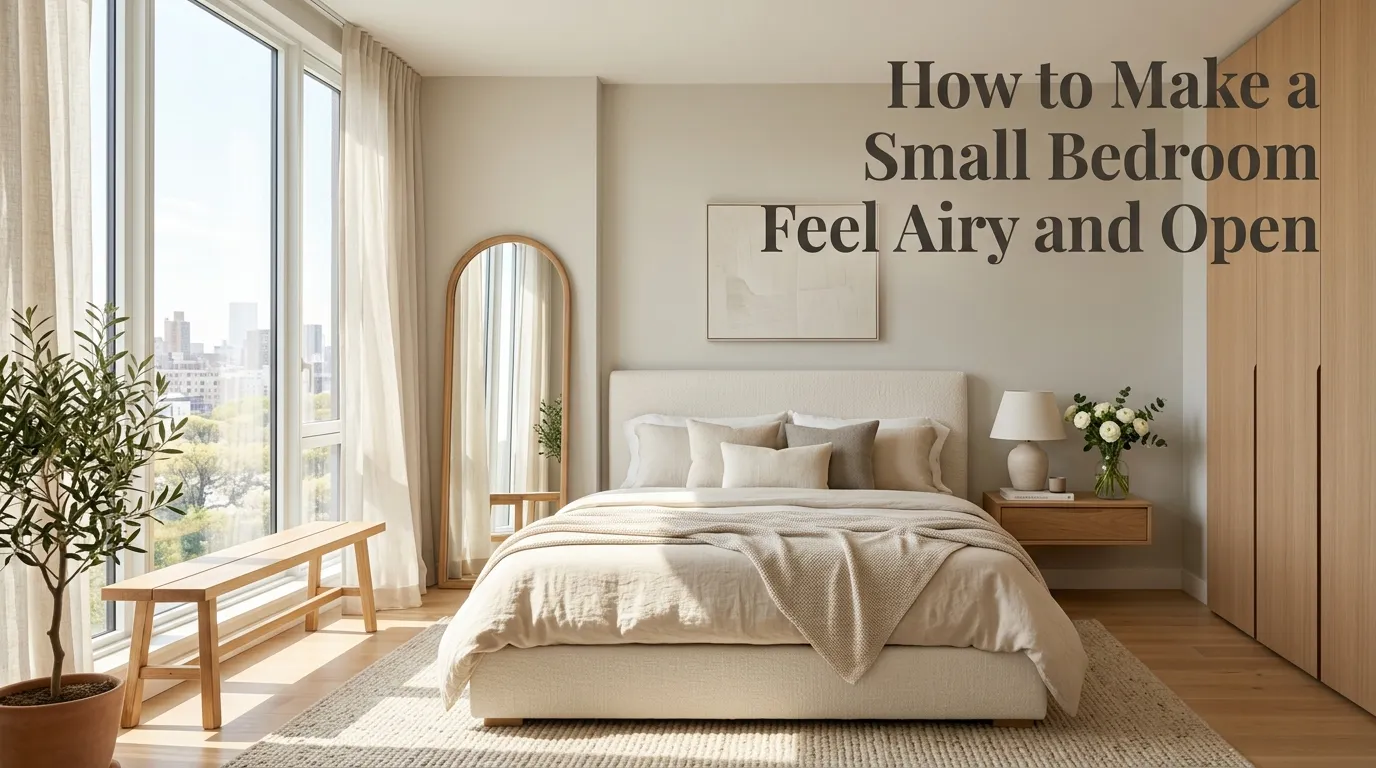
How to Make a Small Bedroom Feel Airy and Open
A small bedroom can feel surprisingly comfortable when the design focuses on openness, light, and thoughtful organization. The challenge is not always the size of the room itself, but how colors, furniture placement, lighting, and décor choices affect the way the space feels.
In my experience, many small bedrooms feel cramped because they contain too many visual obstacles rather than because they lack actual space. I’ve noticed that homeowners often try to solve the problem by adding more furniture or storage pieces, but the better approach is usually creating a sense of flow and allowing the room to breathe.
A mistake many people make is assuming that a small bedroom needs to be completely minimal. While reducing clutter helps, an airy bedroom can still include beautiful textures, artwork, plants, and personal touches. The key is choosing elements that support openness rather than competing for attention.
Simple design decisions can dramatically change how a bedroom feels. Light colors can reflect natural brightness, mirrors can create depth, and properly scaled furniture can improve movement throughout the room. Even small updates like changing curtains or rearranging furniture can make the space appear larger.
Creating an open feeling does not require expensive renovations. It is about understanding how visual balance works and making intentional choices with the space you already have.
This guide shares ten practical ideas to help make a small bedroom feel brighter, larger, and more comfortable while maintaining a stylish and inviting atmosphere.
Table of Contents
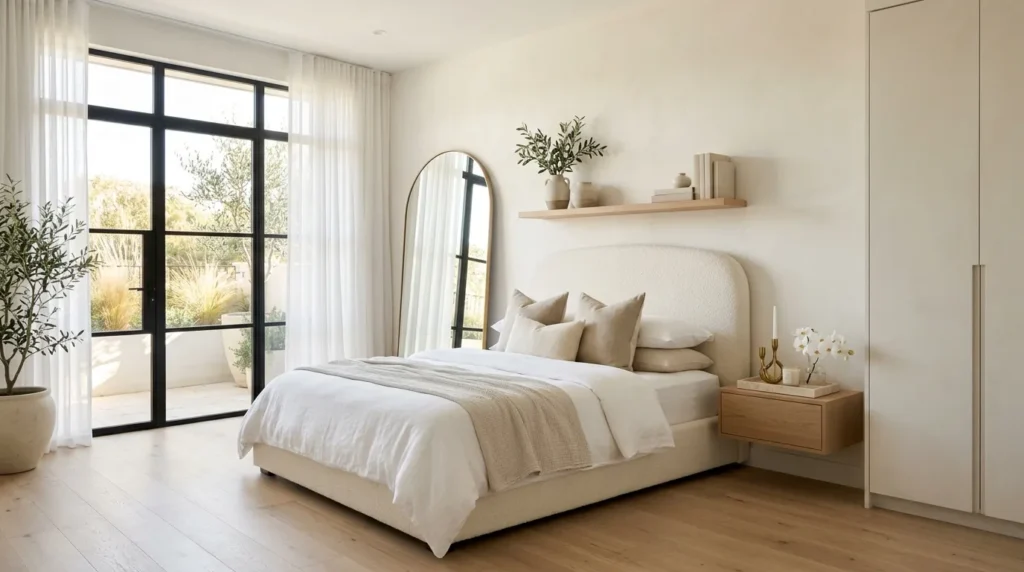
- Light Color Palettes — Use soft shades to open the room.
- Strategic Mirror Placement — Create the illusion of more space.
- Raised Furniture Styles — Improve visual openness.
- Minimal Window Treatments — Maximize natural light.
- Smart Furniture Layouts — Improve movement and flow.
- Vertical Design Elements — Draw the eye upward.
- Clear Surface Styling — Reduce visual heaviness.
- Soft Lighting Layers — Add warmth without crowding.
- Transparent Furniture Pieces — Maintain an open look.
- Natural Airy Textures — Create a relaxed atmosphere.
1. Light Color Palettes
Quick Benefits
- Makes rooms feel brighter
- Creates visual openness
- Reflects natural light
- Works with many styles
- Creates a peaceful atmosphere
Why It Works
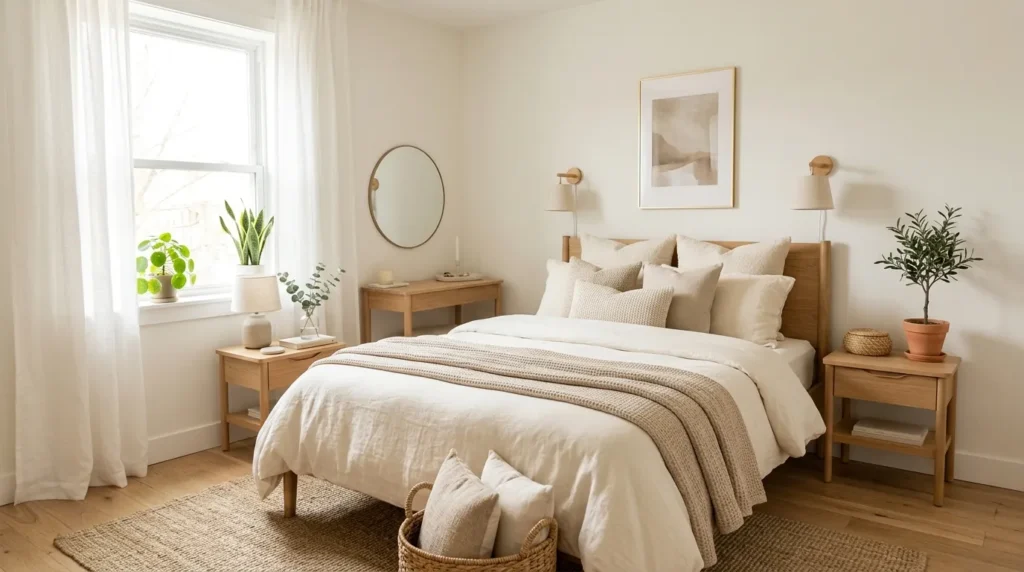
Color has one of the strongest influences on how large or small a bedroom feels. Light shades such as warm white, cream, soft beige, pale gray, and gentle pastels reflect more light and create a sense of openness.
In my experience, many small bedrooms become more inviting after simply changing the wall color or bedding palette. The room does not physically change size, but the visual boundaries become softer.
A mistake many homeowners make is choosing very dark colors throughout a tiny room without considering lighting conditions. While darker shades can feel cozy, they often require careful balance in smaller spaces.
How To Style It
Create a light foundation using walls, bedding, curtains, and larger furniture pieces in soft tones.
Layer different shades instead of using one flat color. Combine warm whites with beige fabrics, light wood furniture, and subtle patterns to add depth.
Add small accents through pillows, artwork, or décor while keeping the overall palette calm and bright.
2. Strategic Mirror Placement
Quick Benefits
- Creates visual depth
- Reflects natural light
- Makes rooms appear larger
- Adds decorative style
- Works in small spaces
Why It Works
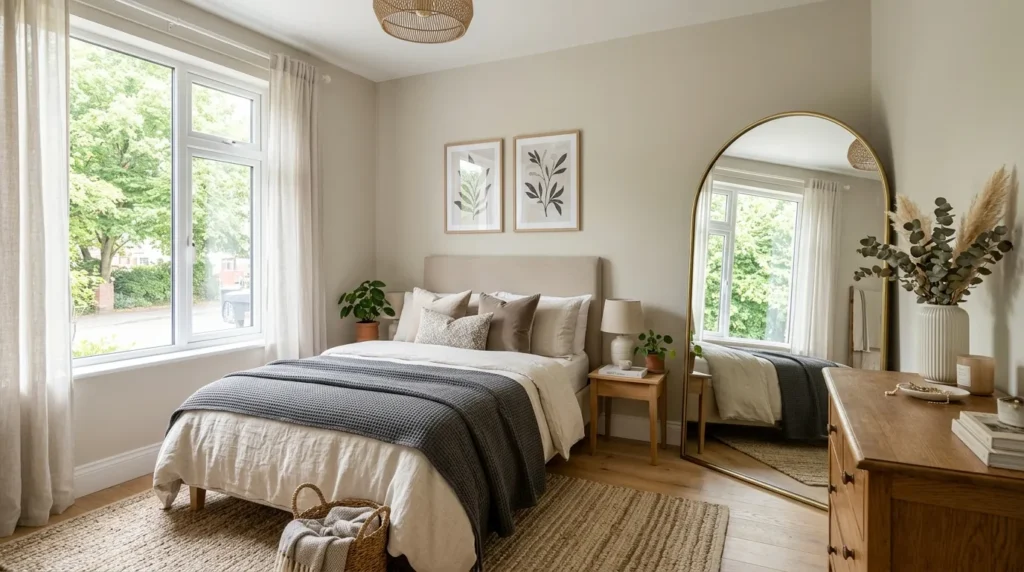
Mirrors are one of the most effective tools for creating the feeling of extra space. By reflecting light and surrounding areas, they can make a bedroom appear more open and spacious.
I’ve noticed that mirror placement matters more than mirror size. A poorly positioned mirror may not add much impact, while the right location can completely change the room’s atmosphere.
Designers often recommend placing mirrors where they can reflect windows, light sources, or attractive areas of the room.
How To Style It
Place a large mirror opposite or near a window to maximize natural brightness. Leaning floor mirrors work especially well because they create height and add elegance.
Choose simple frames that match your bedroom style. Avoid adding too many mirrors, as one thoughtfully placed piece usually creates the strongest effect.
3. Raised Furniture Styles
Quick Benefits
- Creates visual breathing room
- Makes floors appear larger
- Improves room flow
- Adds modern elegance
- Reduces heaviness
Why It Works
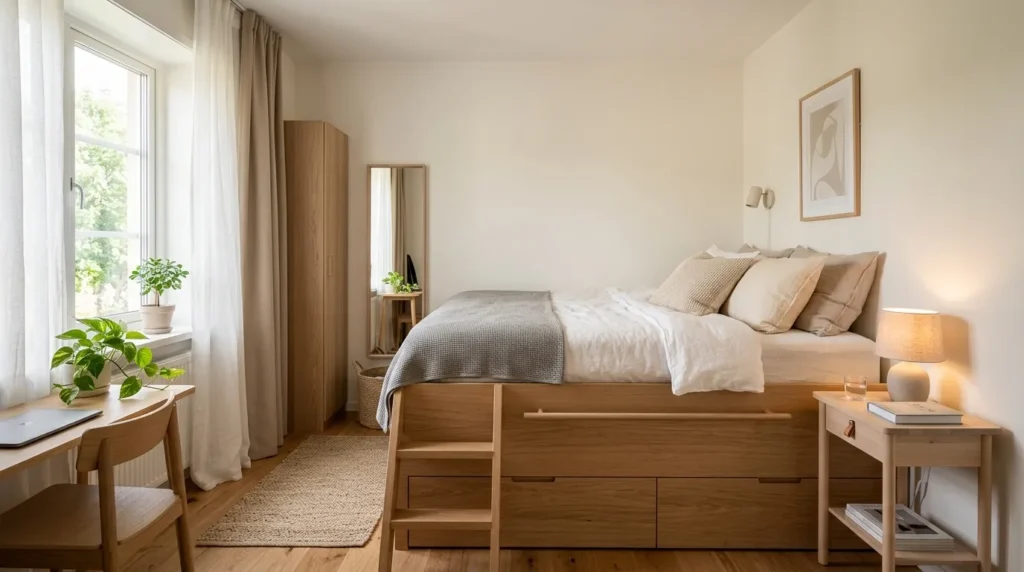
Furniture with visible legs creates more open space because the floor remains visible underneath. This small design detail can make a major difference in compact bedrooms.
In my experience, bulky furniture that sits directly on the floor often makes small rooms feel heavier. Raised furniture creates a lighter appearance without sacrificing comfort.
A mistake many people make is choosing oversized storage furniture because they focus only on function instead of how the piece affects the overall room balance.
How To Style It
Choose beds, nightstands, and dressers with elevated legs whenever possible. Light wood or slim metal legs can create a more open appearance.
Avoid extremely large furniture pieces. Select items that fit the room proportions while still providing necessary storage.
4. Minimal Window Treatments
Quick Benefits
- Maximizes daylight
- Creates a brighter room
- Makes windows appear larger
- Adds softness
- Improves openness
Why It Works
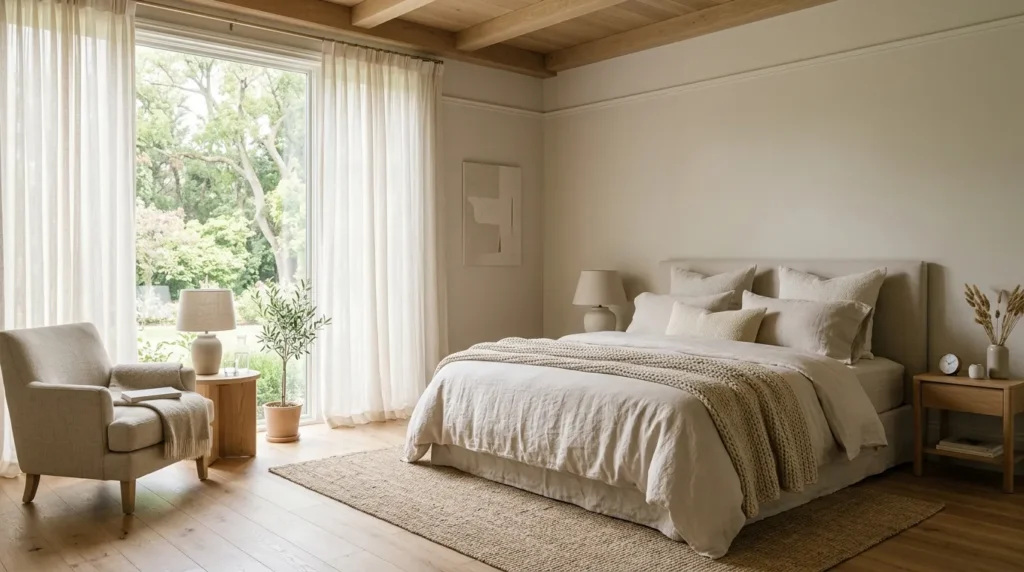
Natural light is one of the most important elements in creating an airy bedroom. Heavy curtains or dark window coverings can block brightness and make a small space feel enclosed.
I’ve noticed that replacing thick curtains with lighter fabrics often creates an immediate transformation. The room feels fresher and more connected to the outdoors.
A mistake many homeowners make is hanging curtains directly over the window frame, which can make windows appear smaller.
How To Style It
Choose lightweight linen, cotton, or sheer curtains that allow natural light to filter through.
Install curtain rods slightly above and wider than the window frame. This simple trick makes windows appear larger and creates a taller, more spacious feeling.
5. Smart Furniture Layouts
Quick Benefits
- Improves movement flow
- Makes the room feel larger
- Reduces crowded areas
- Creates better functionality
- Enhances comfort
Why It Works
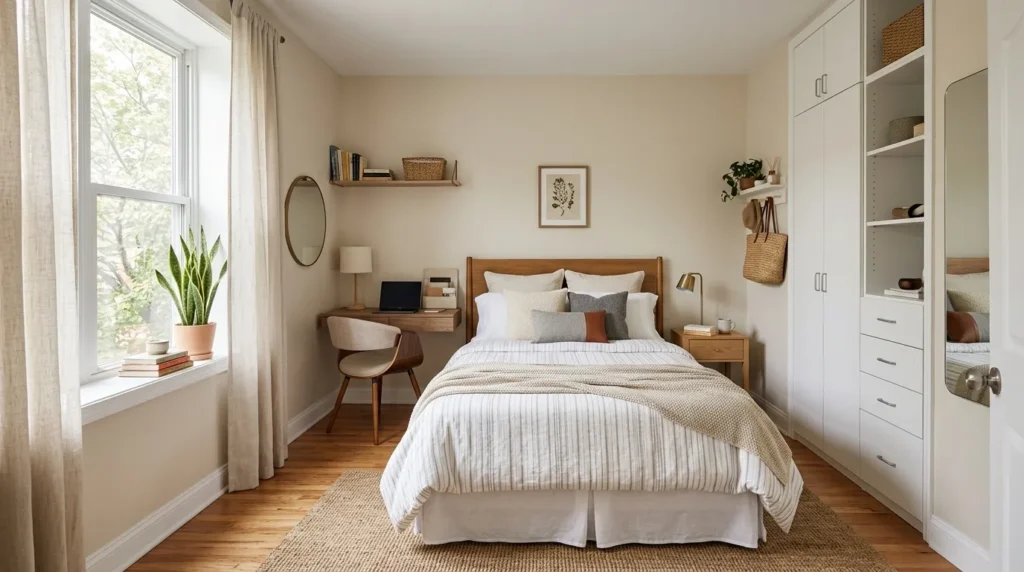
Furniture placement can completely change how a small bedroom feels. Even the same furniture can create a spacious or cramped atmosphere depending on where each piece is positioned.
In my experience, many small bedrooms feel tight because furniture blocks natural pathways. I’ve noticed that creating clear walking areas often makes the room feel more open without removing anything.
A mistake many homeowners make is pushing every piece against a wall automatically. While this can work in some spaces, the wrong arrangement can make the room feel disconnected and visually heavy.
How To Style It
Start by identifying the natural movement path through the bedroom. Keep enough space around the bed and avoid placing large furniture where it blocks entry points.
Choose a layout that prioritizes comfort and function. Sometimes moving a nightstand, changing the bed direction, or removing one unnecessary piece can dramatically improve the room.
6. Vertical Design Elements
Quick Benefits
- Draws attention upward
- Creates a taller appearance
- Uses unused wall space
- Adds architectural interest
- Improves room balance
Why It Works
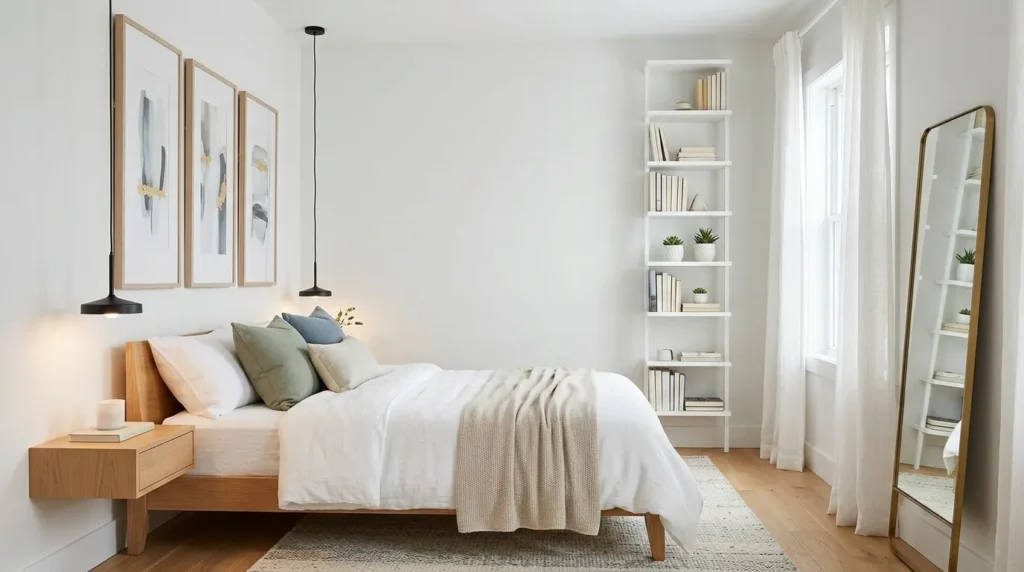
When floor space is limited, using vertical design elements helps create the illusion of height. The eye naturally follows upward lines, making ceilings appear taller and the room feel more spacious.
I’ve noticed that small bedrooms often have unused wall areas that could improve both storage and design. Vertical elements help maximize space without adding clutter.
That’s why many designers recommend focusing upward in compact rooms instead of filling every available floor area.
How To Style It
Use tall bookshelves, vertical artwork, floor-length curtains, or wall-mounted shelves to create height.
Hang artwork slightly higher than usual and choose tall decorative pieces for corners. Keep vertical styling balanced so the room still feels calm and uncluttered.
7. Clear Surface Styling
Quick Benefits
- Reduces visual clutter
- Creates a cleaner appearance
- Makes rooms feel calmer
- Highlights favorite pieces
- Improves daily organization
Why It Works
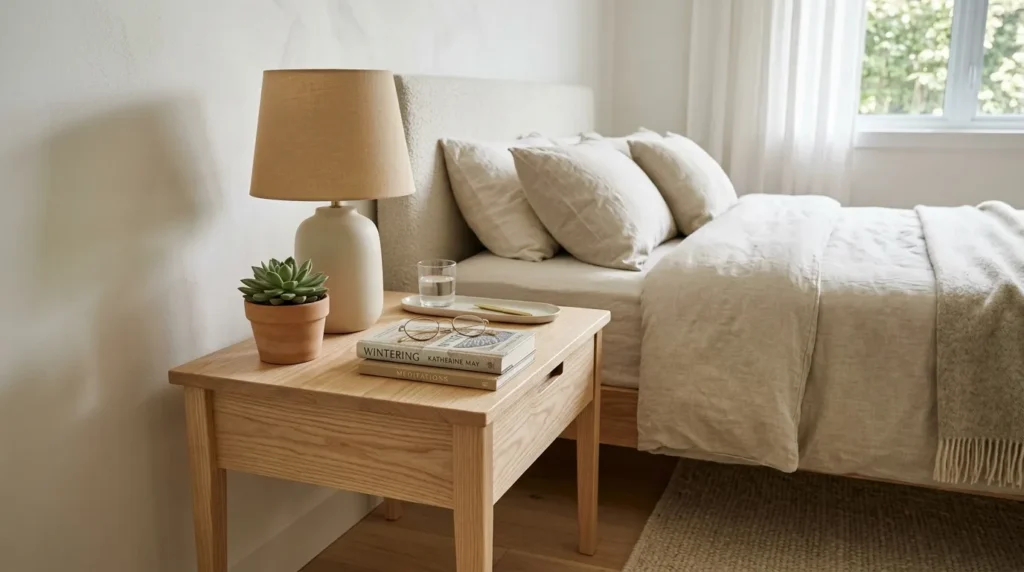
Visible surfaces strongly influence how spacious a bedroom feels. Crowded nightstands, dressers, and shelves create visual noise that makes a small room feel smaller.
In my experience, clearing surfaces is one of the fastest ways to create an airy feeling. The room immediately feels lighter because the eye has fewer distractions.
A mistake many people make is decorating every available surface. While accessories add personality, too many small objects can overwhelm a compact bedroom.
How To Style It
Keep bedside tables simple with only essentials such as a lamp, book, and small decorative item.
Group similar objects together instead of spreading many small pieces throughout the room. Use trays or baskets to keep necessary items organized while maintaining a clean appearance.
8. Soft Lighting Layers
Quick Benefits
- Creates warmth
- Improves bedroom atmosphere
- Reduces harsh shadows
- Adds depth
- Supports relaxation
Why It Works
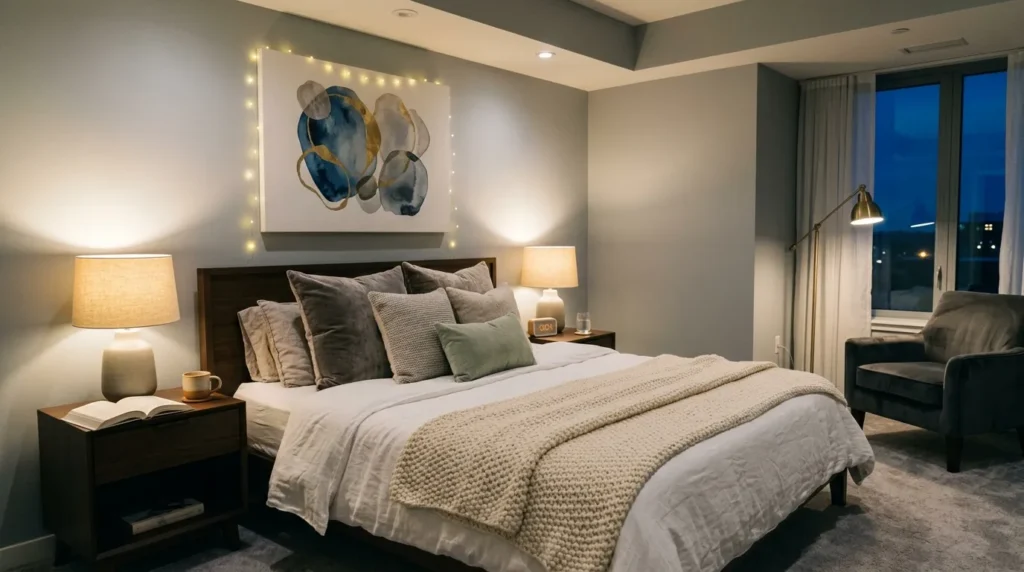
Lighting affects how large and comfortable a bedroom feels. A single overhead light often creates flat illumination, while layered lighting adds dimension and makes the space feel more welcoming.
I’ve noticed that small bedrooms often appear larger when different light sources create gentle layers throughout the room.
A mistake many homeowners make is choosing bright, cool lighting that makes the bedroom feel more like a workspace than a relaxing retreat.
How To Style It
Combine ceiling lighting with bedside lamps, wall sconces, or decorative lights.
Choose warm bulbs that create a soft glow. Place lamps near reading areas, corners, and bedside tables to distribute light evenly throughout the room.
9. Transparent Furniture Pieces
Quick Benefits
- Maintains visual openness
- Reduces heavy appearance
- Adds modern style
- Works in tiny rooms
- Creates a lighter design
Why It Works
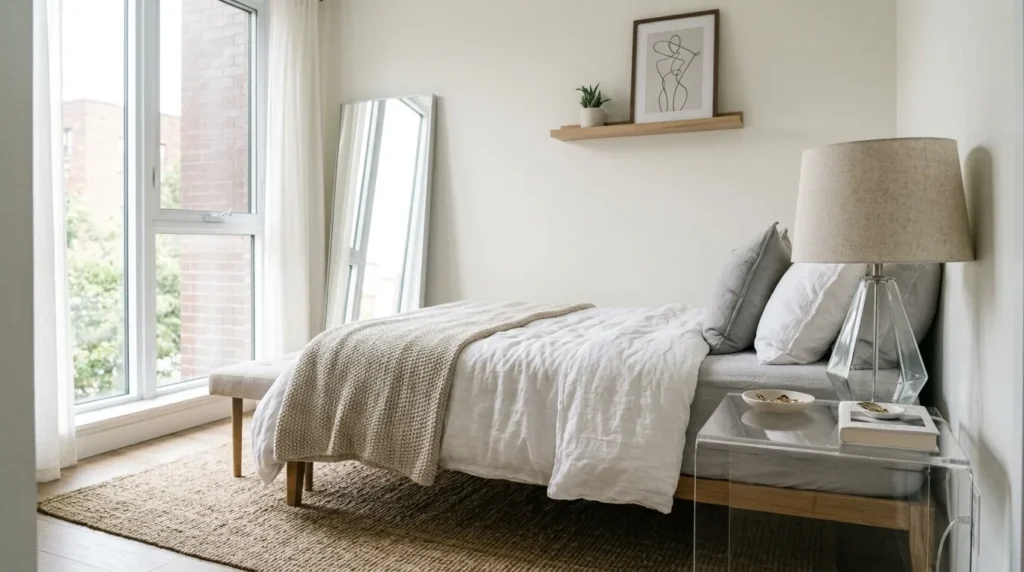
Transparent or visually lightweight furniture can make a small bedroom feel less crowded because it takes up less visual space. Glass, acrylic, and slim designs allow the eye to move through the room more easily.
In my experience, small rooms benefit from furniture that does not create strong visual barriers. The more open the sight lines, the larger the room tends to feel.
A mistake many people make is choosing furniture only based on storage capacity without considering its visual weight.
How To Style It
Add pieces like acrylic side tables, glass lamps, or furniture with slim metal frames.
Balance transparent pieces with softer materials such as fabric bedding, rugs, and curtains so the bedroom still feels warm and comfortable.
10. Natural Airy Textures
Quick Benefits
- Adds comfort
- Creates softness
- Supports relaxed styling
- Brings natural beauty indoors
- Makes rooms feel inviting
Why It Works
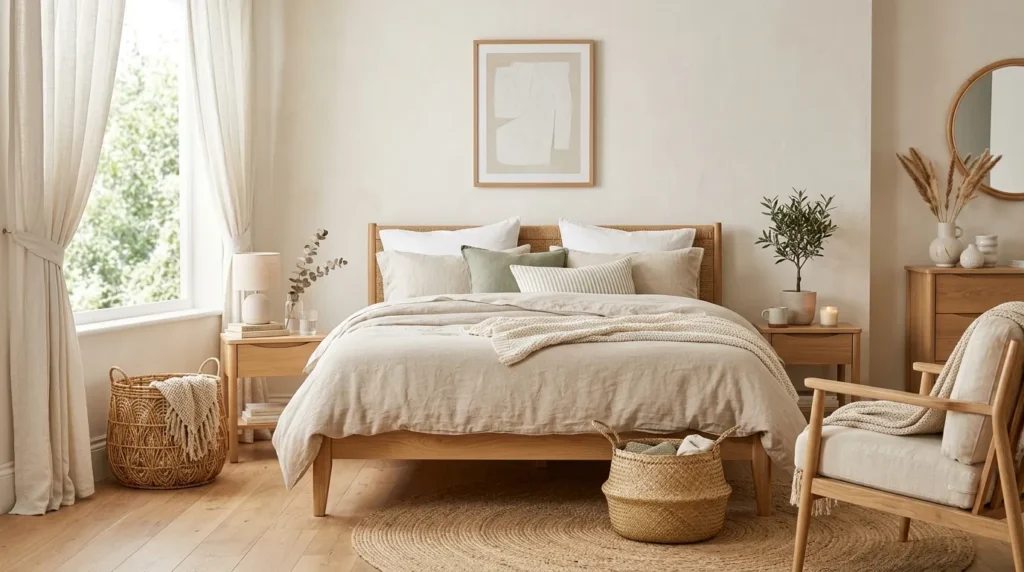
Textures play an important role in making a bedroom feel open and comfortable. Lightweight natural materials create softness without adding visual heaviness.
I’ve noticed that airy bedrooms often use materials like linen, cotton, rattan, and light wood because they create a relaxed atmosphere.
A mistake many homeowners make is adding too many thick, heavy fabrics in a small room, which can make the space feel enclosed.
How To Style It
Choose breathable bedding, lightweight curtains, woven baskets, and natural rugs.
Combine different textures in similar colors to create depth without overwhelming the room. Soft layers add comfort while maintaining a fresh and open feeling.
Frequently Asked Questions
How can I make a small bedroom look bigger naturally?
Use light colors, mirrors, natural lighting, and furniture with open designs. Keeping surfaces organized and reducing visual clutter also helps create a larger appearance without major renovations.
What colors make a small bedroom feel more spacious?
Light neutrals such as warm white, cream, beige, and soft gray are popular choices because they reflect light and create a more open atmosphere.
Should I use large furniture in a small bedroom?
Choose furniture based on room proportions. A few well-sized pieces usually work better than many smaller items that create clutter.
Where should I place a mirror in a small bedroom?
Place mirrors where they can reflect natural light, such as opposite windows or near bright areas. This creates depth and makes the room feel more open.
Do curtains affect how large a bedroom feels?
Yes. Lightweight curtains hung higher and wider than the window frame can make windows appear larger and help the room feel taller.
How do I keep a small bedroom feeling airy?
Maintain clear surfaces, avoid unnecessary furniture, use smart storage, and choose décor that adds personality without creating visual clutter.
Conclusion
Making a small bedroom feel airy and open is about creating balance between function, comfort, and visual simplicity. The goal is not removing everything from the room but making thoughtful choices that allow the space to breathe.
Small changes like lighter colors, better furniture placement, layered lighting, and organized surfaces can completely transform the feeling of a bedroom. When every element has a purpose, even compact spaces can feel calm, stylish, and inviting.
Start with one improvement that fits your lifestyle, whether it is replacing heavy curtains, rearranging furniture, or simplifying surfaces. Over time, these small adjustments can help create a bedroom that feels larger, brighter, and more peaceful.
Related Articles
- 10 Cozy Aesthetic Bedroom Ideas for Every Home
- How to Organize a Small Bedroom Without Extra Storage
- Small Bedroom Decorating Ideas on a Budget
- Minimal Bedroom Ideas for a Calm Home
- Bedroom Color Ideas That Create a Relaxing Space