

Heavy-Duty Modern Square Matte Black Handrail Brackets: Weight Limits
Introduction
Determining the correct matte black handrail brackets weight limits is essential for ensuring your stair system remains secure and compliant with safety standards. Because bracket weight capacity is cumulative, the total rail weight is distributed across all installed brackets, making proper planning vital for any installation.
This article covers the technical specifications and safety considerations for installing heavy-duty square hardware. You will learn about typical load-bearing expectations, the importance of correct fastener usage, and how to maintain structural integrity when mounting to various surfaces like structural wood studs or masonry. By following these guidelines, you can ensure your project meets the necessary safety requirements while achieving a modern, polished aesthetic.
Max Weight Capacity Explained
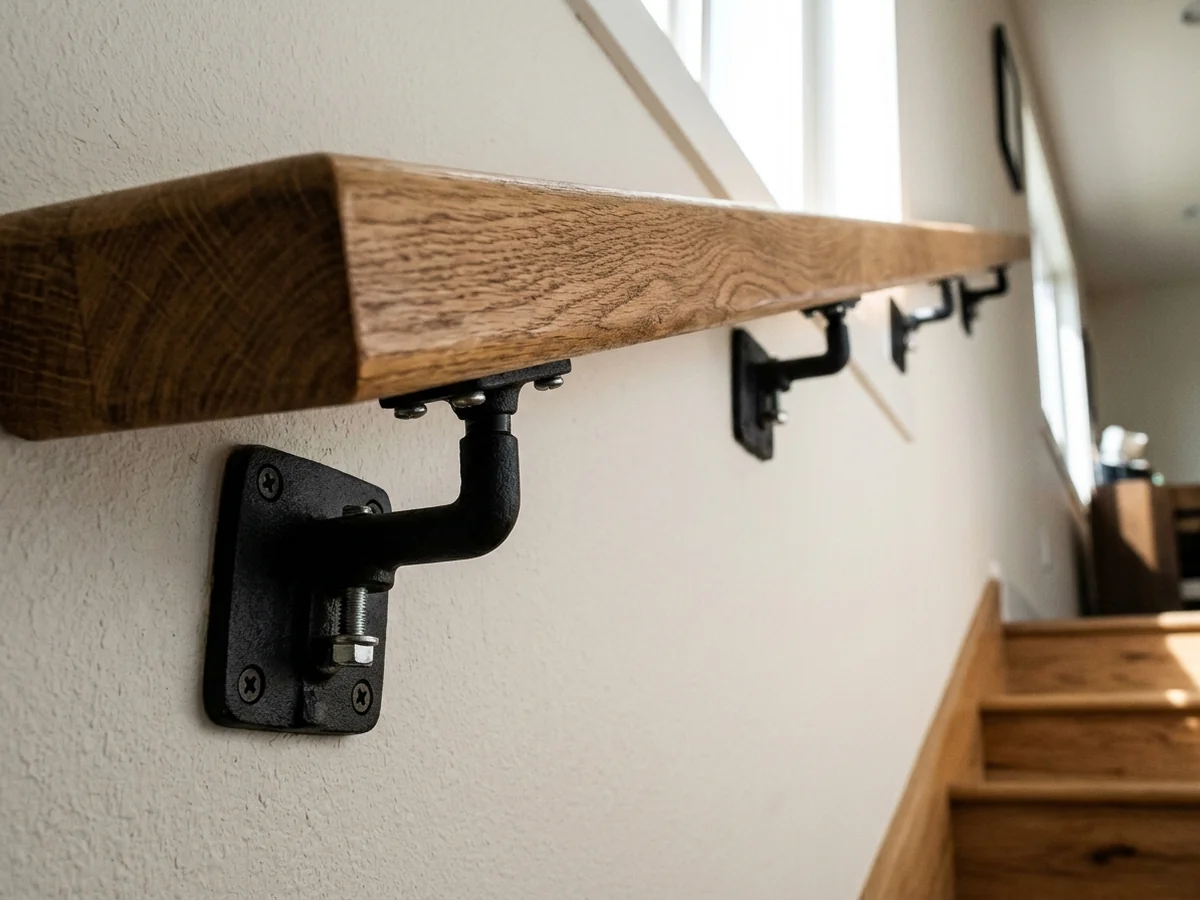
Bracket weight capacity is cumulative, meaning the total rail weight is distributed across all installed brackets. When planning the installation of heavy-duty hardware, it is essential to understand that no single bracket carries the entire load of the handrail system. Instead, the total force is shared among every point of attachment, provided that each bracket is correctly secured to a structural member.
For residential safety, common guidance suggests that handrails should be designed to withstand a load of 50 pounds per linear foot applied in any direction. While aesthetic choices like matte black hardware often prioritize visual appeal, the structural integrity of the assembly remains the priority. Achieving a balance between design and safety requires selecting heavy-duty handrail mounting hardware that is explicitly rated for structural support rather than decorative use alone.
Professional installation is critical for ensuring the system meets performance expectations. If the fasteners are not properly seated, the overall capacity of the assembly decreases significantly. Consider these essential safety factors for your installation:
- Failure to use the manufacturer’s specified screw size significantly reduces the weight limit of the bracket assembly.
- Handrail brackets must be securely fastened to prevent rotation under load.
- Fasteners used to secure brackets to studs must penetrate structural wood by at least 1 inch.
- Masonry installation requires expansion anchors to meet load-bearing requirements for handrail brackets.
Aesthetic finishes such as a matte black powder coat provide higher abrasion resistance than standard liquid paint, which can help maintain the integrity of the bracket surface over time. However, be aware that this hardware is prone to showing scratches that reveal the base metal if the coating is compromised. Ensuring a high-quality finish during the manufacturing process is one way to protect the underlying metal from environmental wear.
Finally, always confirm your installation meets local building codes regarding placement. For example, handrail height must be between 34 and 38 inches measured vertically from the leading edge of the stair tread. Additionally, the clearance between the handrail and the wall must be at least 1.5 inches to ensure a proper grip. By combining these structural standards with appropriate mounting techniques, you create a system that is as reliable as it is visually refined.
Understanding Bracket Load Capacity

Bracket weight capacity is cumulative, meaning the total rail weight is distributed across all installed brackets as per California Division of Occupational Safety and Health regulations. Because the load is shared among the entire assembly, the structural integrity of the system depends on the combined strength of every individual component.
It is essential to distinguish between a static weight limit and the forces applied during daily use. A static limit typically refers to the weight a bracket can support while stationary. In contrast, daily use involves dynamic forces, such as a person leaning on the rail or pulling on it for support while climbing stairs. These active forces require a much higher safety threshold than simply supporting the weight of the railing material itself.
Manufacturers often specify load ratings to ensure the hardware performs as expected under intended conditions. Adhering to these limits is critical for maintaining structural integrity and preventing hardware failure. Using the incorrect screw size or failing to account for the total distribution of weight significantly reduces the effectiveness of the entire assembly.
Common industry guidance suggests several best practices to maintain these standards:
- Fasteners used to secure brackets to structural wood studs should penetrate the wood by at least 1 inch.
- Handrail brackets must be securely fastened to prevent rotation under load, which can compromise the stability of the entire system.
- Failure to use the manufacturer’s specified screw size significantly reduces the weight limit of the bracket assembly.
- Masonry installation requires expansion anchors to meet load-bearing requirements for handrail brackets, as standard wood screws will not hold securely in stone or brick.
Beyond individual bracket ratings, the way a rail is mounted influences overall safety. Consistent spacing and secure anchoring ensure that no single bracket is forced to bear more than its rated share of the cumulative load. Always verify that your chosen heavy duty handrail mounting hardware is rated for the specific material of your wall surface to ensure long-term reliability.
Surface Density and Mounting Hardware

The structural integrity of any installation depends heavily on the mounting surface and the hardware used to secure the assembly. According to Garfield County building guidelines, masonry installation requires expansion anchors to meet necessary load-bearing requirements. Relying on standard wall anchors in stone, brick, or concrete will not provide the stability needed to support a rail under pressure.
For installations involving standard residential framing, securing brackets into structural wood studs is essential. Because the bracket weight capacity is cumulative, the total rail weight is distributed across all installed brackets, placing significant localized force on the connection points. Utilizing heavy duty handrail mounting hardware that anchors directly into the wooden frame ensures that the assembly remains rigid and capable of handling typical usage.
Consistent fastener penetration is a key factor in maintaining a secure hold. It is common practice for professional installers to ensure that screws penetrate structural wood by at least 1 inch. Using shorter fasteners risks pulling out of the wood under force, which compromises the entire system. Furthermore, failure to use the manufacturer’s specified screw size significantly reduces the weight limit of the bracket assembly.
To ensure a reliable installation, keep these technical considerations in mind:
- Always verify that brackets are securely fastened to prevent rotation under load.
- Select expansion anchors specifically rated for your masonry type when mounting to stone or concrete.
- Avoid mounting solely into drywall or plaster, as these materials lack the density to support the required load.
- Ensure that the final assembly maintains a clearance between the handrail and the wall of at least 1.5 inches to comply with safety standards.
Proper surface preparation prevents common issues like loose hardware or wall damage over time. By prioritizing a direct connection to structural members or using the correct expansion hardware in masonry, you create a stable foundation for the handrail. This approach ensures that the hardware performs as intended, regardless of the finish or aesthetic style of the components.
Weight Limits and Material Strength

When evaluating matte black handrail brackets weight limits, it is important to remember that the total load is cumulative, meaning the combined weight of the rail and its users is distributed across every bracket installed. While the base metal provides the primary structural integrity, the finish choice and its application process can influence the performance and installation precision of your hardware.
Common industry guidance suggests that matte black finishes are typically achieved through powder coating, a process that provides higher abrasion resistance than liquid paint. This finish acts as a protective layer, but its thickness can affect the assembly process if not carefully considered during manufacturing. Because powder coating adds a measurable layer of material to the hardware surface, it can occasionally impact the fit and tolerance of mounting screws, making it essential to use the exact fasteners provided by the manufacturer.
Consider the following technical factors regarding hardware finish and installation integrity:
- Matte black hardware is prone to showing scratches that reveal the base metal if the item is not properly powder-coated.
- Failure to use the manufacturer’s specified screw size significantly reduces the weight limit of the bracket assembly.
- Handrail brackets must be securely fastened to prevent rotation under load, ensuring the rail remains stable during use.
- Fasteners used to secure brackets to structural wood studs must penetrate the wood by at least 1 inch to maintain a secure hold.
- Masonry installation requires expansion anchors to meet load-bearing requirements for handrail brackets, as standard wood screws will not provide sufficient grip.
- As a general practice, handrails should be designed to withstand a 50 pounds per linear foot load applied in any direction.
Beyond the finish, the physical design of the bracket plays a role in how well it manages stress. Square brackets often provide a distinct look, but their ability to remain rigid under pressure depends entirely on the quality of the connection to the wall and the rail. Always ensure that the mounting surface is dense enough to support the intended load, as even the strongest bracket will fail if the underlying substrate is compromised or if the fasteners are not seated correctly. By prioritizing proper installation techniques and verified hardware, you ensure that the aesthetic appeal of a matte black finish does not come at the expense of safety or structural reliability.
Compliance With Safety Standards

Adhering to established safety requirements ensures that your handrail installation is both functional and secure. Handrail height must be between 34 and 38 inches measured vertically from the leading edge of the stair tread. Furthermore, the clearance between the handrail and the wall must be at least 1.5 inches. These specific measurements are frequently referenced in the ADA Standards for Accessible Design to maintain user safety and accessibility.
When selecting your mounting hardware, it is important to remember that bracket weight capacity is cumulative, meaning the total rail weight is distributed across all installed brackets. If you are mounting to masonry, you must use expansion anchors to meet load-bearing requirements for handrail brackets. These official guidelines help ensure that your setup performs reliably under typical use.
| Requirement | Verified Metric |
|---|---|
| Handrail Height | 34 to 38 inches |
| Wall Clearance | Minimum 1.5 inches |
| Masonry Installation | Expansion anchors required |
| Load Distribution | Cumulative across all brackets |
Beyond these verified dimensions, common guidance suggests that handrails should be designed to withstand a 50 pounds per linear foot load applied in any direction. To achieve this, it is typical practice to ensure your fasteners penetrate structural wood by at least 1 inch. You should also verify that all brackets are securely fastened to prevent rotation under load, as failing to use the manufacturer’s specified screw size significantly reduces the weight limit of the bracket assembly.
While matte black hardware offers a sleek aesthetic, common guidance notes that these finishes are typically achieved through powder coating, which provides higher abrasion resistance than liquid paint. However, be aware that matte black hardware is prone to showing scratches that reveal the base metal if not properly powder-coated. Always prioritize these structural considerations over purely aesthetic choices to maintain a safe environment that meets ADA handrail clearance standards.
Common Installation Mistakes

Installing heavy-duty mounting hardware incorrectly compromises the safety of your stair system regardless of the individual bracket’s rated capacity. Proper attachment ensures the assembly performs as intended under load, while oversight during this phase often leads to instability.
The following practices are essential for maintaining the integrity of your handrail assembly:
- It is common guidance that failure to use the manufacturer’s specified screw size significantly reduces the weight limit of the bracket assembly.
- You must ensure that all handrail brackets are securely fastened to prevent rotation under load, as loose connections create dangerous pivot points.
- Avoid using hardware intended strictly for decorative purposes in high-traffic areas where structural support is required for safety.
- When working with structural wood studs, common guidance dictates that fasteners must penetrate the wood by at least 1 inch to maintain a reliable grip.
- Masonry installations require specific expansion anchors to meet load-bearing requirements, as standard wood screws will not hold securely in stone or concrete.
- Always remember that bracket weight capacity is cumulative, meaning the total rail weight is distributed across all installed brackets, as confirmed by California Code of Regulations Title 8, Section 3030.
Beyond these mechanical considerations, verify that your finished installation meets all relevant safety measurements. For instance, the clearance between the handrail and the wall must be at least 1.5 inches, as outlined in California Code of Regulations Title 8, Section 3214. Furthermore, confirm your railing height is between 34 and 38 inches measured vertically from the leading edge of the stair tread, according to the Town of Truckee building guidelines.
When planning your layout, be mindful of handrail bracket spacing requirements to ensure the load is balanced evenly. While aesthetic choices like a matte black powder coat provide excellent durability and abrasion resistance, the finish should never be prioritized over the structural necessity of using high-quality, load-rated fasteners. If you notice the hardware wobbling or the wall material compressing under pressure, reassess your attachment points immediately to prevent long-term failure. Consistent inspection of these connections is vital, especially in busy households where the rail experiences daily use.
Weight Capacity Safety Guidelines

The total weight capacity for any handrail system is cumulative, meaning the load is distributed across all installed brackets. While individual hardware pieces have their own structural limits, the stability of the entire assembly depends on the strength of the mounting surface and the integrity of the fastener connections.
Common industry practice suggests that handrails should be designed to support a load of 50 pounds per linear foot applied in any direction. To maintain this level of performance, it is vital to use the specific screw size recommended by the manufacturer. Using incorrect fasteners often compromises the assembly and significantly reduces the overall weight capacity of the system.
Installation on non-standard surfaces requires specialized attention to ensure safety. If you are mounting hardware onto metal studs or thin veneer masonry, consult a licensed contractor to determine the appropriate blocking or reinforcement methods. For masonry specifically, you must use expansion anchors to meet necessary load-bearing requirements for the hardware to remain secure.
Complex stair configurations often involve non-linear paths or unique angles that demand precise bracket placement. If your project involves intricate turns or custom layouts, professional assistance is highly recommended to ensure the hardware supports the rail correctly throughout the entire run. Improper placement can lead to uneven weight distribution and potential points of failure.
Building codes provide essential standards for safety, and you should verify local requirements if your project involves significant structural modifications or additions. Keep in mind that handrail brackets must be securely fastened to prevent rotation under load, as even minor movement can weaken the connection over time. Following these guidelines helps ensure the long-term durability and safety of your installation.
Understanding Weight Limits for Handrail Brackets
When installing matte black handrail brackets, it is important to recognize that weight capacity is cumulative. This means the total load of the rail is distributed across all installed brackets, rather than relying on a single connection point to bear the entire weight. Common guidance suggests that handrail systems should be designed to withstand a load of 50 pounds per linear foot applied in any direction to ensure user safety.
To achieve these load-bearing requirements, hardware installation must be precise. It is common practice to ensure that fasteners used to secure brackets to structural wood studs penetrate the material by at least 1 inch. Furthermore, brackets must be securely fastened to prevent rotation under load. If you are installing into masonry, use expansion anchors to meet necessary load-bearing standards. Failing to use the manufacturer’s specified screw size can significantly reduce the weight limit of the total assembly.
When selecting your hardware, remember that matte black finishes are typically achieved through powder coating, which often provides higher abrasion resistance than standard liquid paint. However, this hardware can still be prone to showing scratches that reveal the base metal if the coating is compromised. Always verify that your chosen brackets meet the specific load requirements for your installation type to ensure long-term stability and compliance.
FAQ
Where can I find black handrail brackets?
Matte black handrail brackets are available through specialized architectural hardware suppliers, home improvement retailers, and online decor stores. Ensure the retailer provides technical specifications so you can verify the hardware meets structural safety standards for your specific application.
How many brackets do I need for a 12 ft handrail?
The number of brackets required depends on the structural needs of your specific rail material and local building codes. You must place enough brackets to support the load requirements, ensuring the entire assembly remains rigid and secure throughout its entire length.
What is the minimum capacity for a top rail?
While specific capacity requirements can vary by local jurisdiction, industry guidance often suggests designing for a 50 pounds per linear foot load. Always consult your local building department to determine the exact load-bearing standards required for your residential stair configuration.
What is the maximum height without a handrail?
Building codes typically dictate that any stairway with a certain number of risers requires a continuous handrail for safety. For the rails you do install, the height must be between 34 and 38 inches measured vertically from the leading edge of the stair tread.
Conclusion
When selecting hardware, always verify that the specific matte black handrail brackets weight limits meet or exceed the requirements of your local building code. Because bracket capacity is cumulative, the total load of your handrail assembly is distributed across every installed support. Before finalizing your purchase, confirm that your chosen mounting surface, whether structural wood studs or masonry, can support the necessary fasteners and load requirements. Consult the hardware manufacturer documentation to ensure the provided screws are appropriate for your wall type, as failure to use specified fasteners can significantly compromise the safety of your installation.
Sources: townoftruckee.gov, dir.ca.gov, garfieldcountywa.gov
You might also like: 34-Inch to 38-Inch Handrail Height: Measuring Plumb from the Stair Slo