How to Organize a Small Bedroom Without Extra Storage
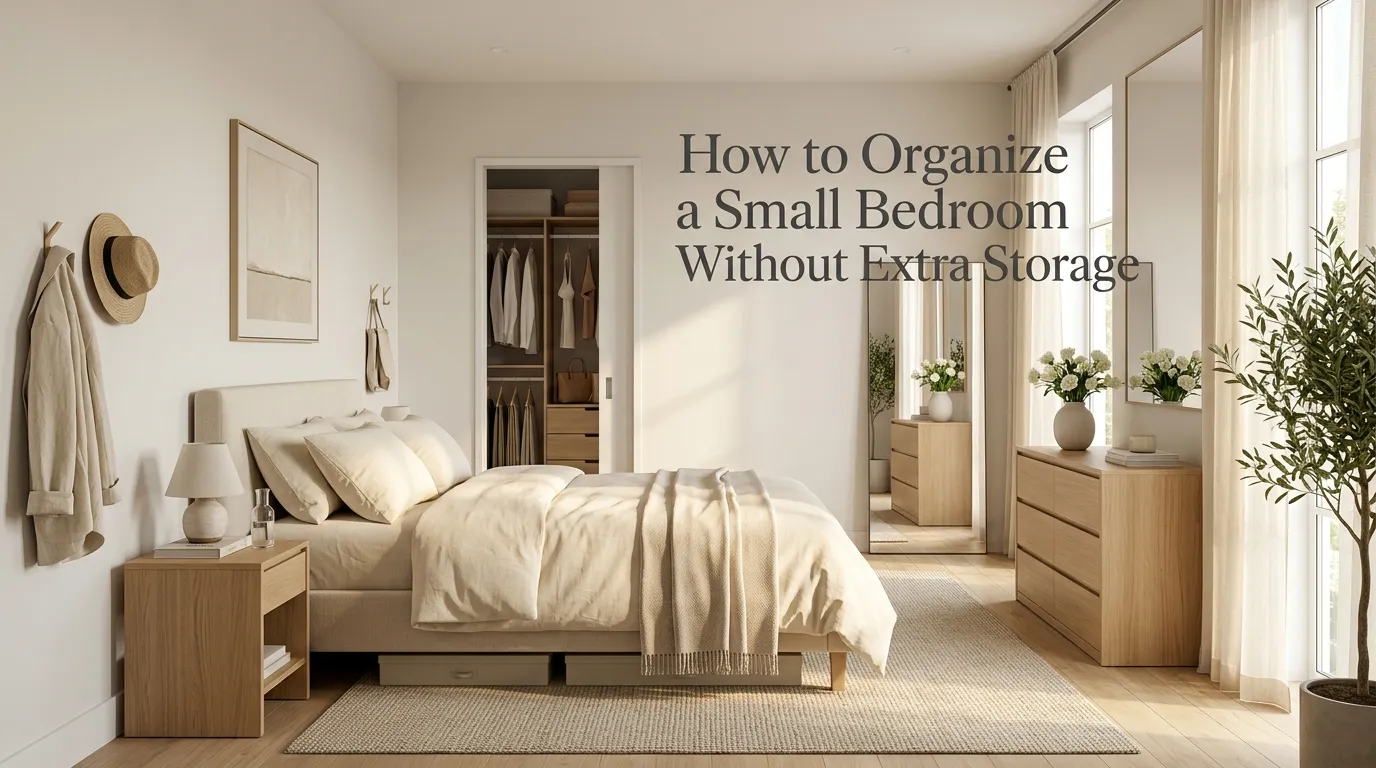
A small bedroom can quickly become challenging when storage space is limited. Clothes, books, accessories, bedding, and everyday items all need a place to belong, but many bedrooms simply do not have enough closets, cabinets, or built-in storage solutions. The good news is that creating an organized bedroom does not always require buying new furniture or adding expensive storage systems.
In my experience, the most functional small bedrooms are not necessarily the ones with the most storage. They are the ones where every item has a purpose and every available area is used intentionally. I’ve noticed that many homeowners assume they need larger closets or more furniture, when the real solution is often improving the way existing space is arranged.
A mistake many people make is adding more storage containers without first removing unnecessary belongings. Extra baskets, bins, and organizers can sometimes create more clutter if they are not part of a thoughtful system. The goal is to create a bedroom that feels open, comfortable, and easy to maintain.
Small bedrooms often have hidden opportunities for organization. The space under the bed, the back of doors, vertical wall areas, and unused corners can all become valuable storage zones with the right approach. Simple adjustments to furniture placement and daily habits can make a noticeable difference.
This guide shares ten practical ideas to help you organize a small bedroom without extra storage. Each idea focuses on realistic solutions that maximize your existing space while keeping your bedroom stylish, peaceful, and functional.
Table of Contents
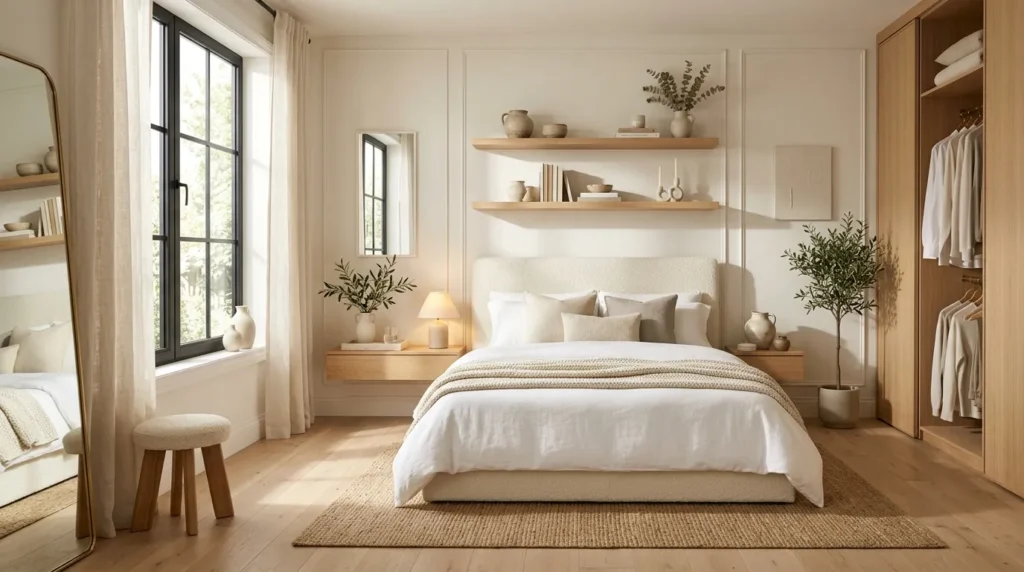
- Use Under Bed Space — Turn hidden areas into storage.
- Maximize Vertical Space — Store upward instead of outward.
- Choose Multi-Use Furniture — Combine comfort and function.
- Organize Closet Efficiently — Improve existing storage.
- Use Door Space — Create hidden organization.
- Reduce Clothing Clutter — Keep only essentials.
- Add Floating Shelves — Create open storage.
- Create Nightstand Solutions — Organize bedside items.
- Use Matching Containers — Maintain visual order.
- Build Daily Habits — Keep your bedroom organized.
1. Use Under Bed Space
Quick Benefits
- Uses forgotten space
- Keeps items hidden
- Reduces visible clutter
- Works in small rooms
- Creates easy access storage
Why It Works
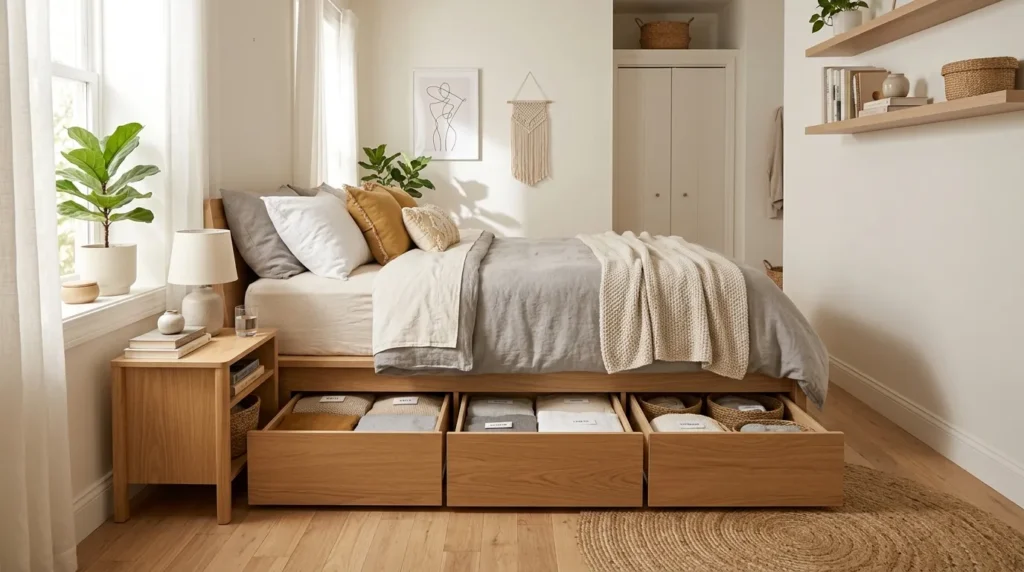
The area underneath the bed is one of the most valuable storage spaces in a small bedroom, yet it is often overlooked. Since the bed usually takes up the largest portion of the room, using this hidden area allows you to store belongings without taking away walking space.
In my experience, under-bed storage creates one of the biggest improvements in small bedrooms because it removes clutter from visible surfaces. Instead of adding bulky furniture, you use space that already exists.
A mistake many homeowners make is allowing the area under the bed to become a random storage zone. Without organization, items become difficult to find and the space quickly becomes messy.
How To Style It
Use flat storage containers, rolling drawers, fabric bins, or vacuum storage bags for seasonal clothing, extra bedding, shoes, and accessories.
Choose containers that fit neatly under the bed and label them clearly. Keep frequently used items toward the front and seasonal belongings farther back.
2. Maximize Vertical Space
Quick Benefits
- Saves floor space
- Creates additional storage
- Makes rooms feel organized
- Uses empty walls
- Adds decorative function
Why It Works
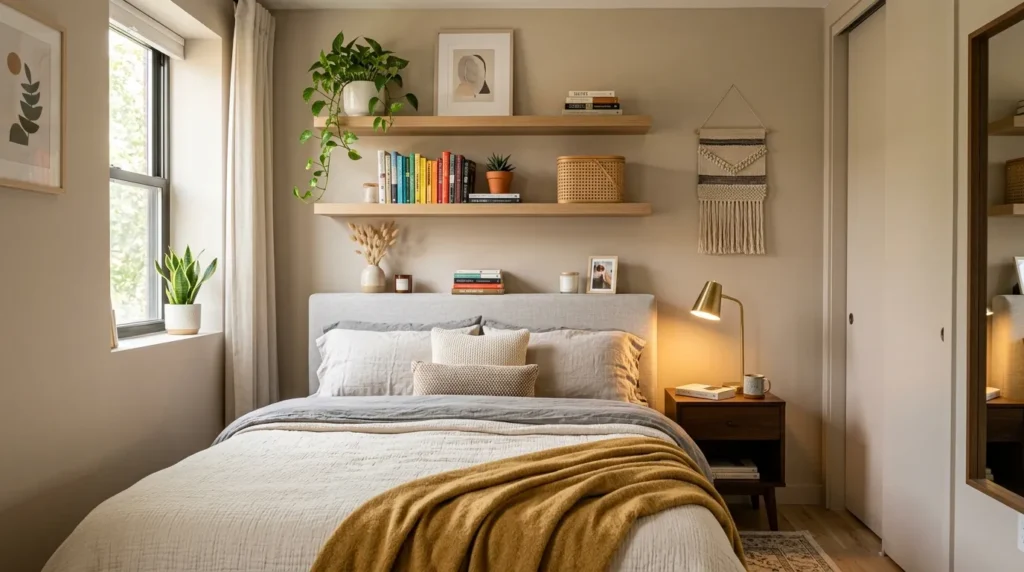
When floor space is limited, looking upward is one of the smartest ways to increase storage. Walls provide valuable organization opportunities without making a bedroom feel crowded.
I’ve noticed that many small bedrooms have completely unused vertical space above beds, desks, and dressers. Adding shelves or wall storage can transform these empty areas into practical zones.
That’s why many designers recommend vertical solutions for compact rooms. They keep important items accessible while maintaining an open floor layout.
How To Style It
Install floating shelves above desks, beds, or dressers for books, plants, decorative items, and small storage baskets.
Use tall narrow shelving units instead of wide furniture pieces when possible. This creates more storage capacity while taking up less valuable floor space.
3. Choose Multi-Use Furniture
Quick Benefits
- Saves space
- Adds functionality
- Reduces furniture needs
- Improves room layout
- Supports small-space living
Why It Works
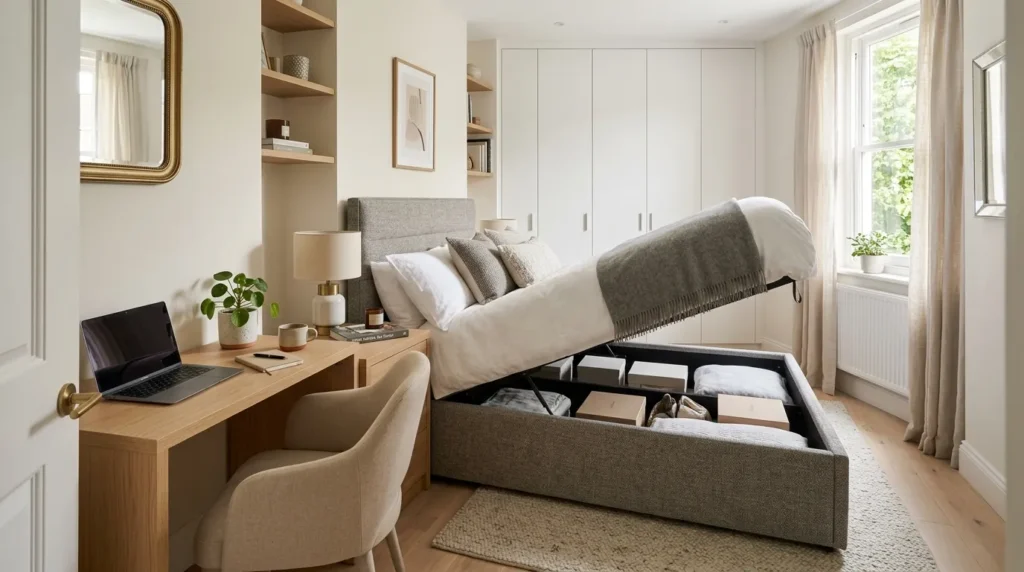
Furniture that serves multiple purposes is extremely valuable in small bedrooms. Instead of filling the room with separate pieces, multifunctional items combine storage and everyday use.
In my experience, small bedrooms feel larger when furniture works harder. A storage ottoman, bedside table with drawers, or desk that doubles as a vanity can eliminate the need for extra pieces.
A common mistake is choosing furniture based only on appearance instead of considering how it supports daily routines.
How To Style It
Choose beds with built-in drawers, benches with hidden storage, desks with shelving, or nightstands with compartments.
Select furniture with clean lines and proportions that match the room size. Avoid oversized pieces that reduce movement and make the bedroom feel crowded.
4. Organize Closet Efficiently
Quick Benefits
- Creates more usable space
- Makes clothing easier to access
- Prevents overcrowding
- Improves daily routines
- Maximizes existing storage
Why It Works
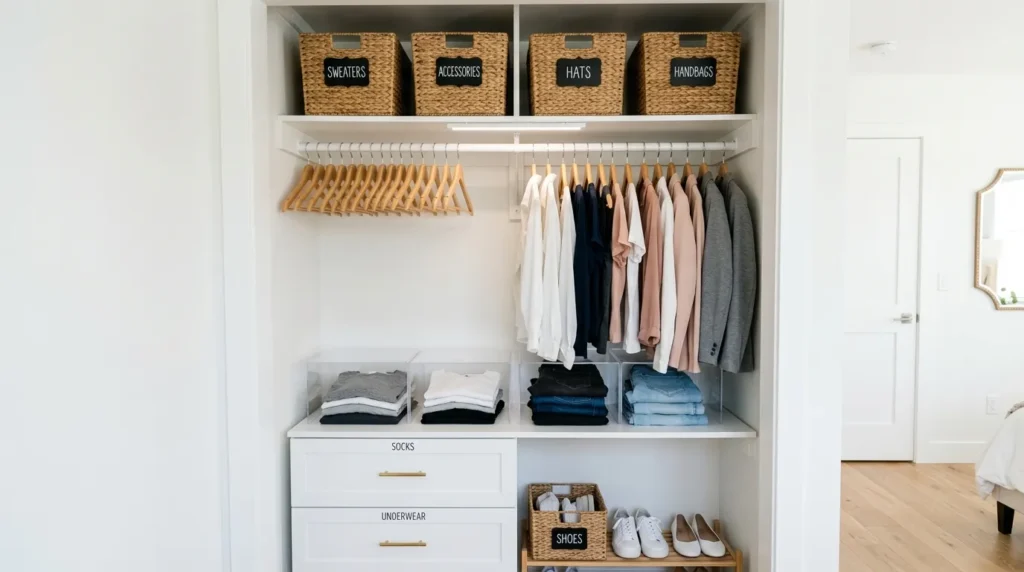
A small closet can often hold much more when organized properly. The problem is usually not the size of the closet but how the available space is being used.
I’ve noticed that many closets contain clothing that is rarely worn, leaving less room for items used regularly. Decluttering and improving the layout can create the feeling of having a larger closet.
How To Style It
Remove clothing you no longer wear and group items by category. Use matching hangers to save space and create a cleaner appearance.
Add shelf dividers, hanging organizers, or small bins for accessories. Keep everyday items at eye level and seasonal items higher or farther back.
5. Use Door Space
Quick Benefits
- Creates hidden storage
- Saves floor space
- Keeps items accessible
- Works in tiny bedrooms
- Uses overlooked areas
Why It Works
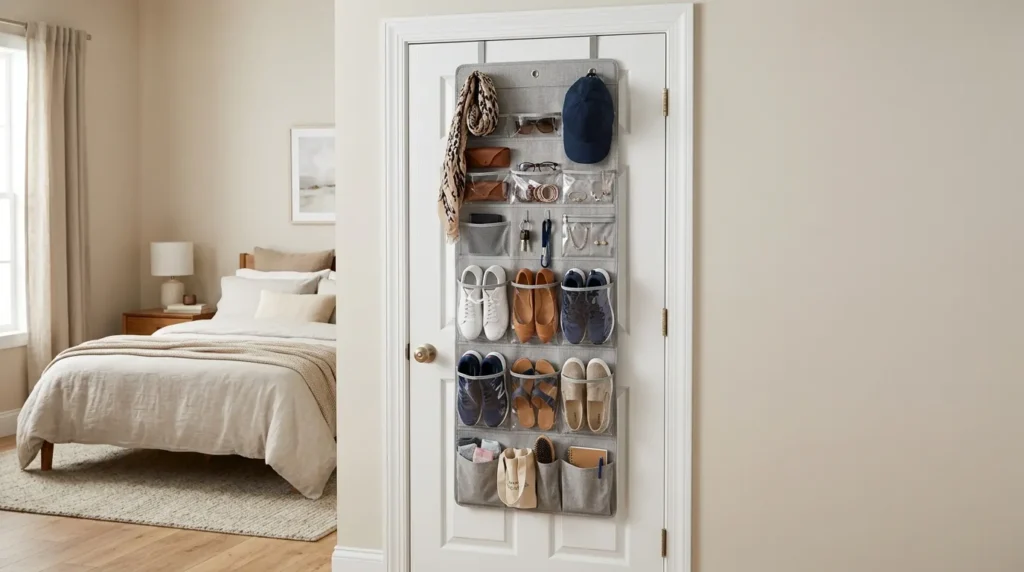
Doors are often one of the most ignored storage opportunities in a small bedroom. The back of a bedroom door, closet door, or cabinet door can provide valuable space for organizing accessories, shoes, beauty products, and everyday essentials.
In my experience, using door space is especially helpful for renters or anyone who cannot install permanent storage solutions. It creates additional organization without changing the room layout.
A mistake many people make is focusing only on furniture storage while ignoring smaller areas that can hold many frequently used items.
How To Style It
Add over-the-door organizers, hanging pockets, hooks, or slim racks depending on your needs. Use them for shoes, scarves, jewelry, bags, cleaning supplies, or small accessories.
Choose simple designs that blend with your bedroom style. Keep the most-used items easily accessible while storing less-used belongings higher or behind less visible areas.
6. Reduce Clothing Clutter
Quick Benefits
- Creates more closet space
- Makes outfits easier to choose
- Reduces bedroom mess
- Improves organization
- Creates a calmer atmosphere
Why It Works
Clothing is often the biggest source of clutter in small bedrooms. When closets and drawers are filled with items that are rarely worn, everyday organization becomes much harder.
I’ve noticed that many people try to solve clothing storage problems by buying more organizers, but the most effective solution is often reducing the amount of clothing first.
A smaller collection of favorite, useful pieces creates more space and makes maintaining an organized bedroom much easier.
How To Style It
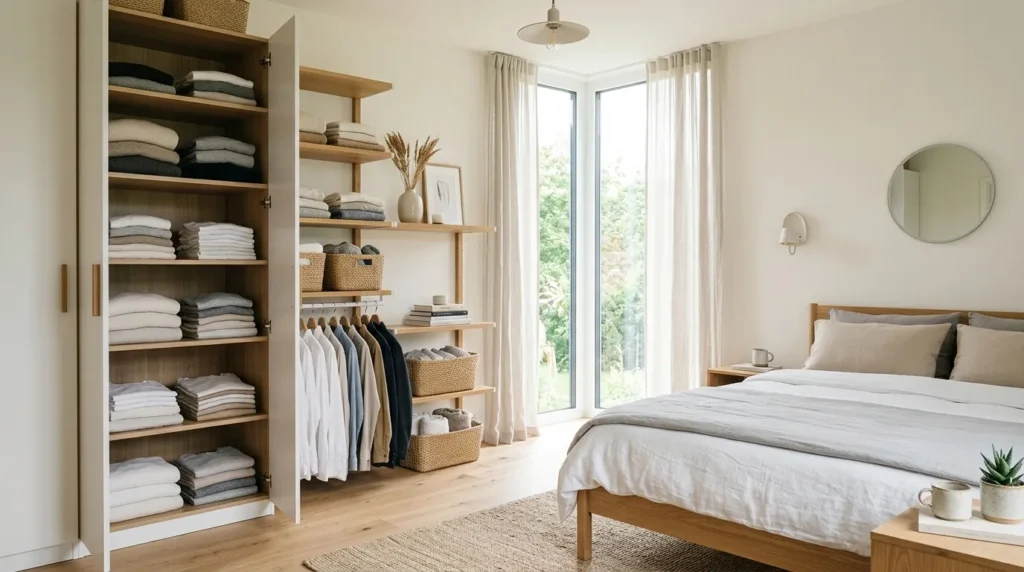
Sort clothing into categories: keep, donate, repair, and seasonal storage. Remove items that no longer fit, are damaged, or have not been worn for a long time.
Organize remaining clothing by type or color. Fold bulky items vertically in drawers to maximize space and make everything easier to see.
7. Add Floating Shelves
Quick Benefits
- Adds storage without furniture
- Uses wall space
- Creates decorative areas
- Keeps floors open
- Works in modern designs
Why It Works
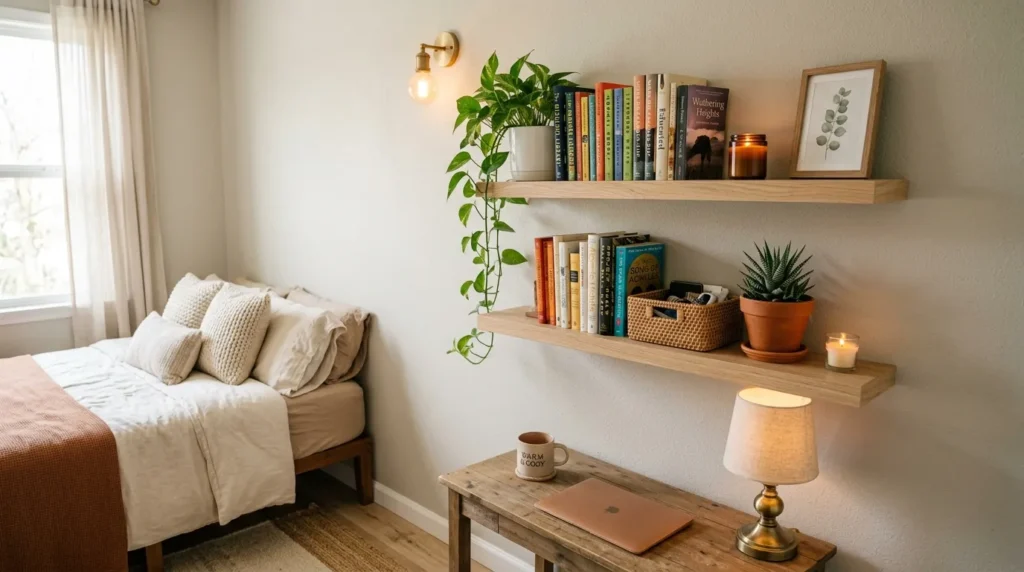
Floating shelves are one of the simplest ways to add storage in a small bedroom without making it feel crowded. Unlike large bookcases or cabinets, shelves use vertical space while maintaining an open appearance.
In my experience, floating shelves create the perfect balance between function and style because they can store useful items while also displaying personal touches.
They are especially helpful in bedrooms where every inch of floor space matters.
How To Style It
Install shelves above desks, beds, or empty wall areas. Use them for books, framed artwork, small plants, baskets, candles, or decorative objects.
Avoid overcrowding shelves. Leave some empty space between items so the room continues to feel light and organized.
8. Create Nightstand Solutions
Quick Benefits
- Reduces bedside clutter
- Improves nighttime routines
- Keeps essentials organized
- Creates a cleaner look
- Uses small spaces effectively
Why It Works
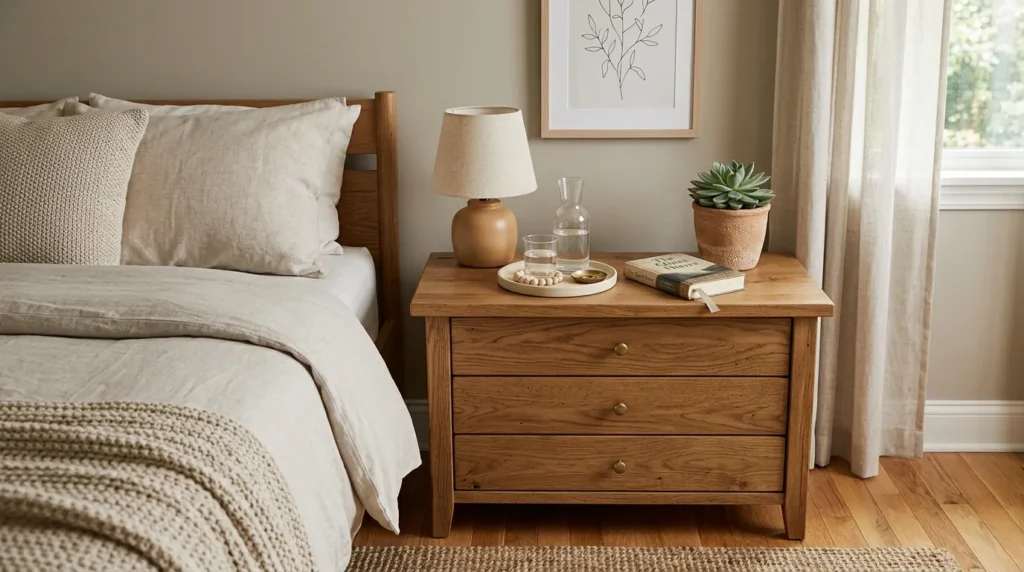
Nightstands often become clutter magnets because they hold everything from chargers and books to skincare products and random belongings. In a small bedroom, even a small messy surface can make the entire room feel disorganized.
I’ve found that improving bedside organization creates an immediate sense of calm because it affects the first and last moments of the day.
How To Style It
Choose a nightstand with drawers or shelves whenever possible. Use small trays or containers to group items like glasses, jewelry, and charging cables.
Keep only essential items visible, such as a lamp, book, or small decorative piece. Store everything else inside drawers or baskets.
9. Use Matching Containers
Quick Benefits
- Creates visual order
- Makes storage attractive
- Simplifies organization
- Reduces clutter appearance
- Works in open spaces
Why It Works
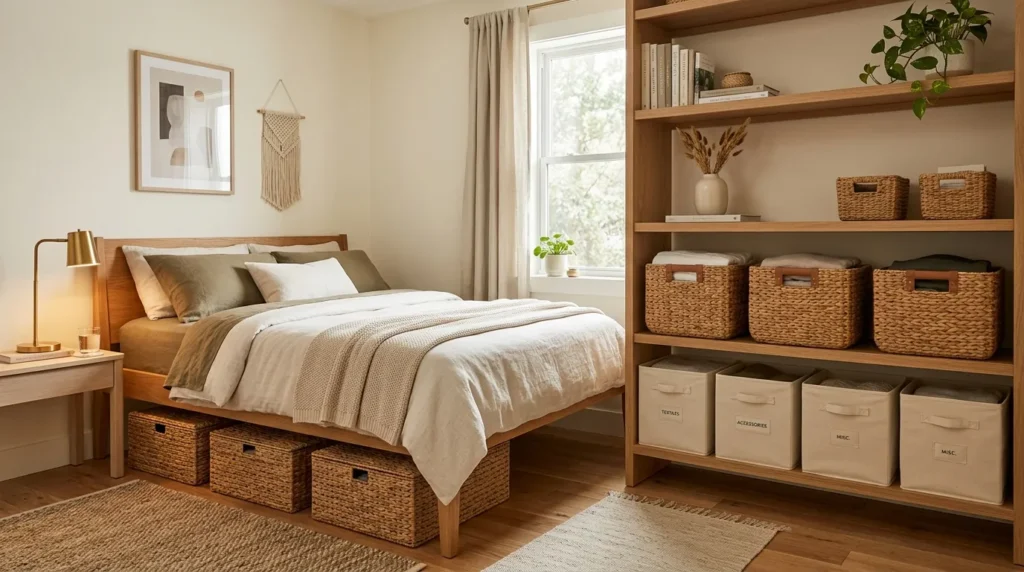
Storage containers are not only practical but also influence how organized a bedroom feels. When different items are grouped into matching baskets or bins, the room appears cleaner and more intentional.
In my experience, visual consistency makes small spaces feel calmer because there are fewer competing shapes and colors.
A mistake many homeowners make is using random containers that create additional visual noise instead of solving clutter problems.
How To Style It
Choose baskets, fabric bins, or containers in a consistent color palette that matches your bedroom décor.
Use them on shelves, under beds, inside closets, or on top of wardrobes. Label containers when needed so maintaining the system stays simple.
10. Build Daily Habits
Quick Benefits
- Prevents clutter buildup
- Keeps organization manageable
- Saves cleaning time
- Improves bedroom comfort
- Creates long-term results
Why It Works
The best organization systems are the ones that are easy to maintain. A small bedroom can quickly become cluttered again if daily habits do not support the space.
I’ve noticed that successful small-space organization is less about complicated storage solutions and more about simple routines. A few minutes each day can prevent hours of cleaning later.
The goal is to create a bedroom that naturally stays organized.
How To Style It
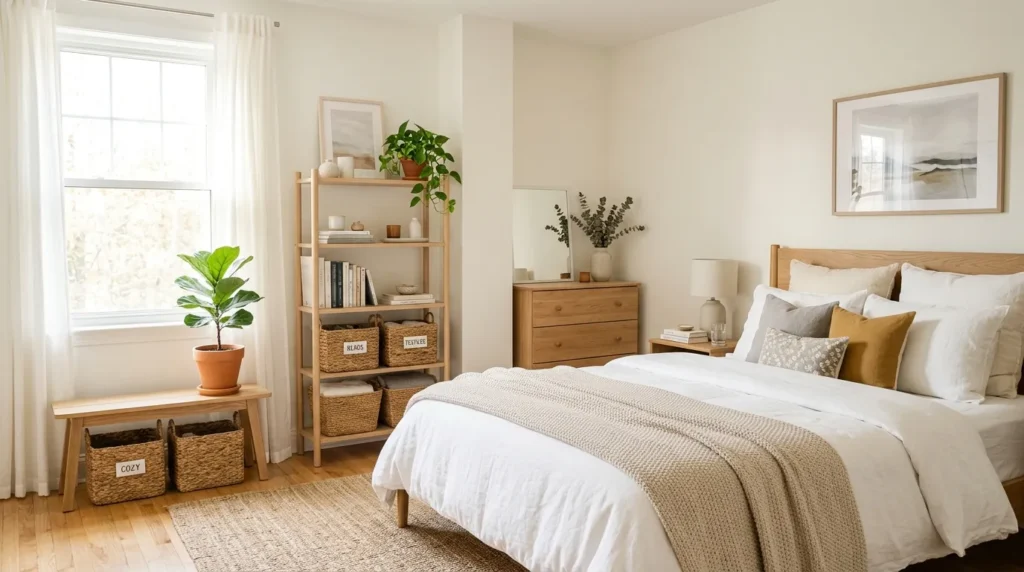
Create simple habits like making the bed each morning, returning clothing after use, clearing surfaces before bedtime, and putting items back in their designated places.
Schedule a quick weekly reset where you organize drawers, remove unnecessary items, and refresh the room.
Frequently Asked Questions
How can I organize a small bedroom with no storage?
Use hidden areas like under the bed, wall space, doors, and multi-purpose furniture. Reducing unnecessary belongings also creates more usable space without adding storage furniture.
What is the best storage solution for a tiny bedroom?
The best solutions are usually those that use existing space, such as under-bed storage, vertical shelving, closet organizers, and furniture with built-in compartments.
How do I make a small bedroom less cluttered?
Start by removing items you no longer use, then create specific places for everything that remains. Keeping surfaces clear makes a small room feel larger.
How do I organize clothes in a small bedroom?
Declutter your wardrobe first, then organize clothing by category. Use slim hangers, vertical folding methods, and seasonal storage to maximize available space.
Can shelves make a small bedroom look bigger?
Yes. Floating shelves keep items off the floor and create vertical interest, which helps maintain an open and organized feeling.
How do I keep my small bedroom organized long-term?
Create simple daily routines, avoid unnecessary purchases, and regularly remove items that no longer serve a purpose.
Conclusion
Organizing a small bedroom without extra storage is completely possible when you focus on using the space you already have more effectively. Hidden areas, vertical walls, smart furniture choices, and simple habits can transform even the smallest bedroom into a comfortable and functional retreat.
The key is not adding more things but creating better systems for the items you truly need. A well-organized bedroom should feel peaceful, easy to maintain, and reflective of your lifestyle.
Start with one area, whether it is your closet, bedside table, or under-bed space, and gradually build an organization system that works for you. Small changes can create a much bigger impact than you might expect.
Related Articles
- How to Make a Small Bedroom Feel Airy and Open
- 10 Cozy Aesthetic Bedroom Ideas
- Small Bedroom Storage Ideas That Maximize Space
- Minimal Bedroom Ideas for a Calm Home
- How to Declutter Your Home Before the Holidays