
Adding Stair Runner Carpeting: How Wide Should the Runner Be on 36 Stairs?
Introduction
Selecting the ideal stair runner width on 36 stairs requires balancing aesthetic proportions with the practical constraints of your staircase architecture. A common guideline for the stair runner width on 36 stairs is to choose a size that leaves approximately 3 to 4 inches of exposed wood on each side of the tread.
This article examines how to achieve professional results when installing carpeting on a multi-level staircase. You will learn about standard width options, including common 36 inch varieties, and how to calculate the total length needed for your project. We also cover how to source materials, as runners can often be purchased by the foot to ensure you have exactly enough for your specific layout. By following these design and measurement principles, you can create a cohesive look that enhances the safety and style of your home.
Determining the Ideal Runner Dimensions for Your Staircase
For a staircase measuring 36 inches in total width, selecting a runner that leaves an equal amount of exposed wood on both sides is essential for achieving a balanced look. Most design professionals suggest leaving approximately 3 to 4 inches of the tread visible on either side of the carpeting material to ensure the staircase architecture remains a focal point while providing a secure, centered path for foot traffic.
Properly sizing your runner is about more than just visual appeal. A well-fitted runner provides a non-slip surface that covers the primary area of the tread, significantly improving safety for everyone in your home. When the runner is too narrow, it can create a tripping hazard at the edges, while a runner that covers the entire tread may hide the attractive details of your staircase construction.
Working with a 36-inch wide staircase configuration requires careful planning to maintain those clean reveal measurements. Since stair runners are commonly available in 36-inch options, you have the flexibility to choose a width that fits your specific needs. However, if you prefer a runner that leaves a wider wood border, you might opt for a narrower width to suit your aesthetic preferences.
When you begin your search for the right carpet runner for 36 inch wide stairs, consider the following practical points:
- Commonly, retailers provide options that allow you to purchase materials by the foot, which is helpful when calculating the total length needed for a project spanning 36 stairs.
- Ensure your measurements account for the entire rise and run of each step to avoid coming up short during installation.
- Consistent spacing on every step is vital, so verify that your chosen width allows for the same amount of reveal on both the left and right sides throughout the entire flight.
By focusing on these proportions, you create a cohesive transition between the carpeted center and the surrounding wood. Taking the time to measure your staircase carefully before ordering your materials prevents installation errors and ensures your finished project looks intentional and polished.
Determining Ideal Runner Width Reveal

The ideal reveal of wood on each side of your carpeting typically measures between 3 and 4 inches. Maintaining this consistent spacing ensures that the staircase retains a balanced, polished look while highlighting the quality of the underlying treads.
When working with standard 36 inch wide stairs, choosing a runner between 27 and 30 inches provides the most aesthetically pleasing result. This range allows for the recommended reveal on both sides without crowding the edges of the steps. A 27 inch runner leaves 4.5 inches of wood exposed on either side, while a 30 inch runner leaves a 3 inch gap. Both options fall within standard design preferences for modern interiors.
Selecting the right dimensions involves considering how the material sits against your specific staircase architecture. You should focus on these factors when finalizing your measurements:
- The visual weight of the carpeting material against the natural wood finish.
- The consistency of the gap across every step, including any landings.
- The total width of the stair treads, ensuring the runner does not extend too close to the edge for safety.
Common guidance suggests that runners are available in 36 inch width options, though these are often trimmed to fit smaller dimensions or used for runners that cover nearly the entire tread. If you find a material you love that is wider than 30 inches, professional installers can often cut and bind the edges to reach your desired width. Many suppliers also offer the flexibility to purchase carpet runners by the foot, which is helpful if you have a long staircase and need to ensure a continuous pattern throughout the entire run.
Take time to measure each tread accurately before committing to a final purchase. Since stairs can occasionally vary slightly in width due to settling or wall construction, checking a few different steps along the flight helps confirm that your chosen reveal will look uniform from top to bottom. Keeping this gap consistent creates a professional, tailored aesthetic that enhances the overall design of your space.
Calculating Runner Length vs Width

To determine the total material required for your project, you must measure the depth of one tread and the height of one riser before multiplying that sum by the total count of stairs. Because stair runners are often sold by the foot, calculating carpet runner length accurately ensures you purchase enough material to cover each step, including the essential fold over the nose of the tread.
Following a precise measurement process helps avoid shortages during installation. When you are planning for a large staircase with 36 individual steps, small errors in measurement can compound into a significant material deficit.
- Start by measuring the depth of the tread and the vertical height of the riser to get your baseline unit length.
- Add a few extra inches to each unit measurement to account for the necessary material that wraps around the nose of the tread.
- Multiply this single unit total by 36 to find the base requirement for your entire staircase.
- Common guidance suggests that runners are frequently available in 36 inch width options, which typically allows for a balanced reveal of wood on either side of a standard 42 or 48 inch wide staircase.
- Remember that because runners can be purchased by the foot in many retail settings, you should round your final calculation up to the nearest full foot to provide a safety margin for cutting and alignment.
- Always verify if your specific staircase configuration includes landings, as these areas require additional material beyond the simple 36 step calculation.
Accounting for the nose of the tread is critical for a professional finish. If you fail to include this extra length in your initial estimate, the carpeting material may pull tight or fail to reach the back of the tread, leaving gaps that affect both the look and the longevity of the installation. Consistent measurements across every step will ensure the pattern alignment remains crisp from the bottom of the flight to the top.
Selecting Runner Width Options

Determining the ideal stair runner width on 36 stairs involves balancing aesthetic proportions with the practical availability of materials. While many homeowners prefer leaving a few inches of wood visible on either side of the runner, standard options often come in fixed widths that may require careful planning.
| Feature | Common Practice |
|---|---|
| Standard Width | 36 inch wide options are widely available |
| Custom Length | Purchasing by the foot is common |
| Visual Balance | Leaving 3 to 4 inches of wood on each side |
Most retailers provide runners in pre-cut widths, with 36 inch wide options being a common guidance for standard staircase architecture. If your goal is to showcase the wood of your stair treads and risers, opting for a slightly narrower runner is a frequent choice. This decision impacts the overall visual weight of the staircase, as a runner that covers too much of the surface can make a narrow flight of stairs feel cramped, while a runner that is too small might look disproportionate.
Flexibility is a major advantage when choosing your materials, as many suppliers allow you to purchase carpet runners by the foot. This is particularly helpful when you are working with a long flight of 36 stairs, as it enables you to order the precise amount needed to cover your specific staircase configuration without significant waste. Whether you choose a standard width or a custom cut, ensure that your measurements account for the total length of the run including the wrap over each nosing.
When selecting a carpet runner for 36 inch wide stairs, consider the texture and pattern of the material, as these elements can influence how the width is perceived. A bold pattern might look best when centered perfectly, requiring accurate measurements during the initial planning phase. If you choose a runner that spans nearly the entire width of the step, you might need to adjust your installation hardware to ensure the carpet remains secure against the stair risers. Always check the backing of your selected material, as some heavier options require more robust staples or specialized stair rods to maintain a clean appearance over time.
Installing Runners on 36-Inch Stairs

For a standard staircase measuring 36 inches in width, a common practice is to select a runner width that leaves approximately 3 to 4 inches of exposed wood on each side of the stair tread. This ensures the runner is effectively centered, creating a balanced visual appearance while maintaining the aesthetic appeal of your staircase architecture.
Achieving a professional result requires careful preparation, starting with the foundation under your carpeting. Using quality carpet padding is essential for both comfort underfoot and long term wear protection. A dense, high-quality pad prevents the runner from shifting during use and helps absorb the impact of footsteps, which significantly extends the life of the carpeting material itself.
You will need a few specific tools to complete this project successfully according to a standard stair runner installation guide. A heavy duty staple gun is the primary tool for securing the material to the treads and risers. You may also choose to incorporate stair rods, which serve as a decorative element and help hold the runner firmly against the crease where the tread meets the riser.
Before you begin securing the material, spend time measuring the center point of every stair to ensure your alignment stays true from top to bottom. It is helpful to mark these center points with a piece of painter tape to serve as a guide throughout the process. When you are ready to fix the runner in place, work from the top of the staircase downwards, smoothing the fabric as you go to prevent wrinkles or bubbling.
- Measure the total width of each tread to determine your desired reveal on both sides.
- Ensure the carpet padding is cut slightly smaller than the width of the runner to remain hidden.
- Use the staple gun to secure the material at the back of each tread and at the base of each riser for a tight fit.
- Verify that each section is perfectly centered before applying final staples or installing optional stair rods.
Since stair runners can be purchased by the foot, calculating the exact amount of material needed for 36 stairs is a vital step. Always account for the extra length required to wrap around the nose of each tread, as this adds to your total material requirements beyond just the height of the individual risers.
Avoiding Common Width Measurement Errors
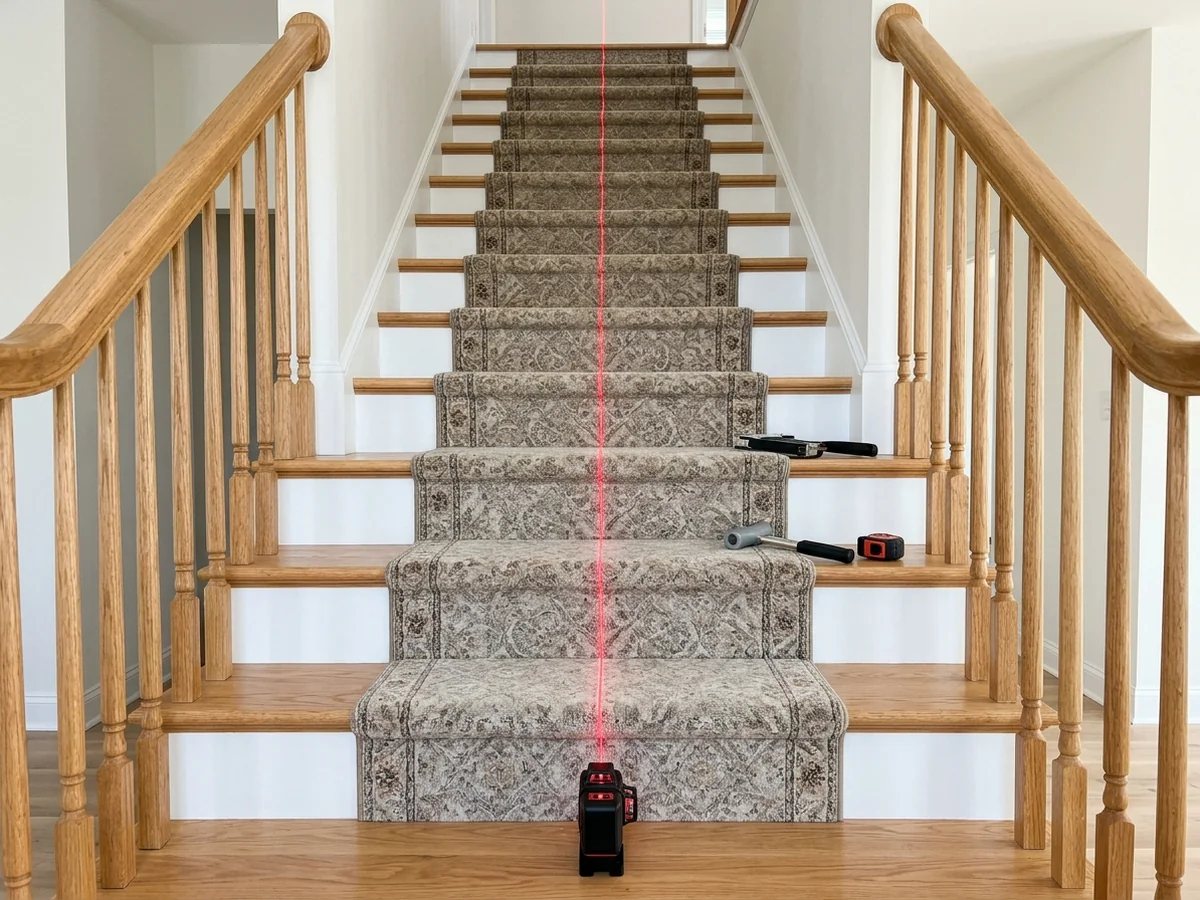
You can prevent installation mistakes by carefully accounting for the physical depth of each tread and verifying the consistency of your staircase dimensions before ordering materials. Precision during the planning stage ensures that your chosen carpet runner for 36 inch wide stairs provides the intended visual reveal without gaps or uneven edges.
Many DIY enthusiasts encounter issues because they fail to anticipate how specific architectural features affect the total amount of material required. Keep these essential considerations in mind to ensure your project remains accurate across a large flight of stairs:
- Remember to include the nosing depth, which is the part of the tread that overhangs the riser, when measuring each step to ensure the runner covers the entire surface correctly.
- Check every single stair for width variations, as older homes often have subtle differences in dimensions that make a perfectly uniform installation difficult.
- Calculate your material needs based on the total number of risers and treads, noting that you can typically purchase carpet runners by the foot to accommodate the length needed for 36 stairs.
- Account for the extra length required to wrap the runner around the nose of each tread, as this significantly increases the total yardage compared to a flat surface measurement.
- Verify that the standard stair runner width you select leaves an appropriate amount of wood visible on both sides, keeping in mind that typical options include 36 inch widths.
- Avoid assuming every stair is identical, as cumulative errors over 36 steps can lead to a significant shortage of material if you only measure the bottom or top tread.
When you prepare for a project of this size, taking the time to measure each individual step prevents the frustration of mid-installation material shortages. By confirming that your measurements account for both the depth of the nosing and the total run of the staircase, you ensure that the final result is both aesthetically balanced and structurally secure. Always err on the side of caution by measuring every tread, especially when working with a large number of stairs, to maintain consistency from the bottom to the top.
Safety Standards for Runner Width

Selecting the right dimensions for your carpet runner is essential for maintaining a secure footing on your staircase. When installing a runner on stairs that are 36 inches wide, the primary safety goal is to ensure the material lies perfectly flat against both the stair treads and the stair risers. Any bunching or loose fabric creates a significant tripping hazard, especially on a long flight of 36 stairs where fatigue may affect how you step.
Common guidance suggests that stair runners are often available in 36 inch width options, which can be purchased by the foot to accommodate your specific staircase length. While these widths are standard, you must ensure the installation is taut and securely fastened using high-quality carpet padding beneath the fabric. This padding prevents the runner from shifting underfoot and provides a consistent, cushioned surface that helps maintain balance.
Local building codes generally focus on the structural integrity of the staircase rather than the specific decorative choice of a carpet runner. However, these codes often mandate that any floor covering on stairs must be securely attached to prevent slipping. It is wise to review your local municipal guidelines regarding surface materials to ensure your aesthetic choices do not conflict with regional safety requirements for stair treads and guardrails.
Complex stair configurations, such as those with winders, landings, or non-standard angles, often present unique challenges that may require professional assistance. If your 36 stairs include turns or irregular shapes, calculating the precise amount of material needed and ensuring proper tension across every surface becomes significantly more difficult. You should consult with an experienced installer or a staircase professional if you encounter any of the following situations:
- The staircase includes curved or triangular winder treads that require custom cutting.
- The layout involves multiple landings that interrupt the continuous run of the carpet.
- You are uncertain about the structural condition of the underlying stair treads or risers.
- The installation requires complex anchoring techniques to ensure the runner remains stable over long periods of use.
Prioritizing stable, well-anchored materials is the most effective way to enjoy the visual appeal of a runner without compromising the safety of your home. Taking the time to secure the runner properly at every point of contact ensures a durable finish that stands up to heavy daily traffic.
FAQ
What is the standard stair runner width for a 36-inch staircase?
While personal preference dictates the final look, common design guidance suggests leaving 3 to 4 inches of exposed wood on both sides of the tread. For a 36-inch wide staircase, this typically means choosing a runner between 27 and 30 inches wide to achieve a balanced, professional appearance.
What widths are available for stair runners?
Stair runners are commonly available in 36 inch width options, though various narrower widths are also produced to accommodate different staircase architectures. You can often find specific sizes depending on the carpeting material and the manufacturer’s inventory.
Can you buy carpet runners by the foot?
It is common practice for retailers to allow you to purchase carpet runners by the foot rather than in fixed, pre-cut lengths. This flexibility is particularly helpful when calculating carpet runner length for a flight of 36 stairs, as it allows you to order the exact amount needed for your specific rise and run measurements.
How do I account for the total number of stairs when measuring?
To calculate the total material required for 36 stairs, you must measure the depth of one tread and the height of one riser, add those together, and multiply by the total number of steps. Always include an additional 6 to 10 inches per step to account for the nose of the tread and proper installation overlap.
Do I need to leave a specific reveal on the sides of my steps?
Achieving consistent stair runner reveal measurements is primarily an aesthetic choice that frames the runner centered on the staircase. Leaving equal portions of the stair tread exposed on the left and right sides creates a clean, intentional look while ensuring the runner remains securely centered.
Conclusion
The final decision rests on balancing your aesthetic preference for exposed wood with the practical safety of covering a sufficient portion of each tread. Before purchasing materials, measure your specific staircase to confirm that the selected carpet runner width on 36 stairs creates the desired reveal on both sides. Since carpet runners can be purchased by the foot, you should calculate your total length requirements carefully, including extra material for the risers and nosing. Once you confirm these dimensions, you will be ready to move forward with sourcing your carpeting material and planning the installation.
You might also like: 34-Inch to 38-Inch Handrail Height: Measuring Plumb from the Stair Slo